



Some organizations lack true depth in one of leadership, strategy and technology. Others have depth in all three variables and no synchronization across them. The symptoms are identical, so time and money tend to be allocated to the wrong problem, not for want of effort but because the difference is genuinely hard to see from the inside. Tom’s sessions are built to make that difference visible.

Keynotes, board offsites, executive summits, association programs and conference sessions. Every one ends with something a team can act on the same week.
How to Build a Modern Competitive Advantage
Most organizations try to align leadership, strategy and technology before any of the three variables is strong enough to be worth synchronizing. The result is coordinated mediocrity. This session makes the case for sequence: depth within each variable first, then synchronization across all three. It also sets out how to tell which one you are thinnest in.
Best for: executive teams, leadership offsites, industry conferences, association programs.
Developing Leaders for Today’s Business Climate
Leadership development is usually run as a personal growth exercise. It is a capability investment, and the skills that worked in a stable environment are not the ones that work when the environment moves faster than the planning cycle. This session covers what to build, in what order, and how to tell whether it is working.
Best for: executive teams, HR and L&D leadership, leadership programs, association programs.
Most Organizations Haven’t Decided What to Do About AI
Most organizations have not decided what to do about AI. They bought something and called it a decision. This session places an organization in one of four states, from ignoring it to rebuilding the work around it, and is honest that almost everyone who believes they are in the third is in the second.
Best for: executive teams, leadership offsites, industry conferences, technology and innovation programs.
The Gap Between Acceptable and Possible
The standard for a board is not whether performance is acceptable, but whether the organization is achieving what its capabilities and conditions make possible. That gap never appears in a well-prepared board package. This session sets out five signals that it is there, and why it is a design problem rather than a diligence problem.
Best for: board retreats and in-camera sessions, governance programs, director education, founder and CEO peer groups.
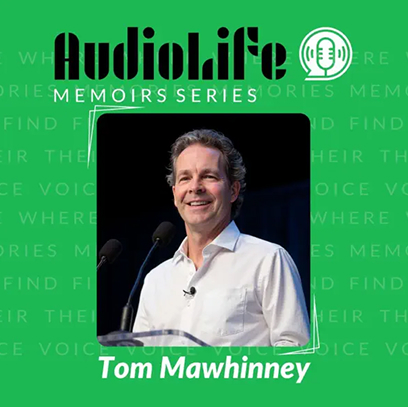
Podcast and media appearances, recorded remotely, at no charge. Broadcast-quality audio and video, comfortable in short and long formats.


What AI is actually doing to organizations
Four states, from ignoring it to rebuilding the work around it, and why almost everyone who believes they are in the third is in the second. The organizations that did everything right and still ended up doing the old work faster are the interesting part.
Best for: business, technology and leadership shows.
The six responses people have to AI, and why none of them are wrong
The Overwhelmed, the Skeptic, the Exposed, the Seeker, the Curious and the Outdated. Almost nobody says which one they are out loud, because most workplaces have made it expensive to admit. Listeners tend to find themselves in about ninety seconds.
Best for: careers, workplace culture and L&D shows.
Why the organizations most at risk are the ones performing well
The difference between performance that is acceptable and performance that is possible. The gap never shows up in a report, because everything in the report says things are fine. It is a design problem rather than a diligence problem, which is why nobody gets blamed and nothing changes.
Best for: leadership, governance and founder shows.
Where competitive advantage actually comes from now
Why the old sources stopped working, and why organizations keep trying to connect leadership, strategy and technology before any of the three variables is deep enough to be worth synchronizing.
Best for: strategy, business and founder shows.
Having sat in all three seats, executive, board member and founder, Tom knows a problem can look like governance from one chair, execution from the next and growth from the third.
He ran his own consulting firm for over a decade and in turn had the opportunity to work with more than two hundred organizations across thirty-five industries. His current books and thought leadership have extended out of that comprehensive experience.
Today, Tom writes under his own imprint, ClearLens Media, speaks to boards and executive teams, appears regularly as a guest on podcasts, and takes on a small number of advisory engagements.
He is based in Calgary, Canada, and actively engages with organizations around the world.